
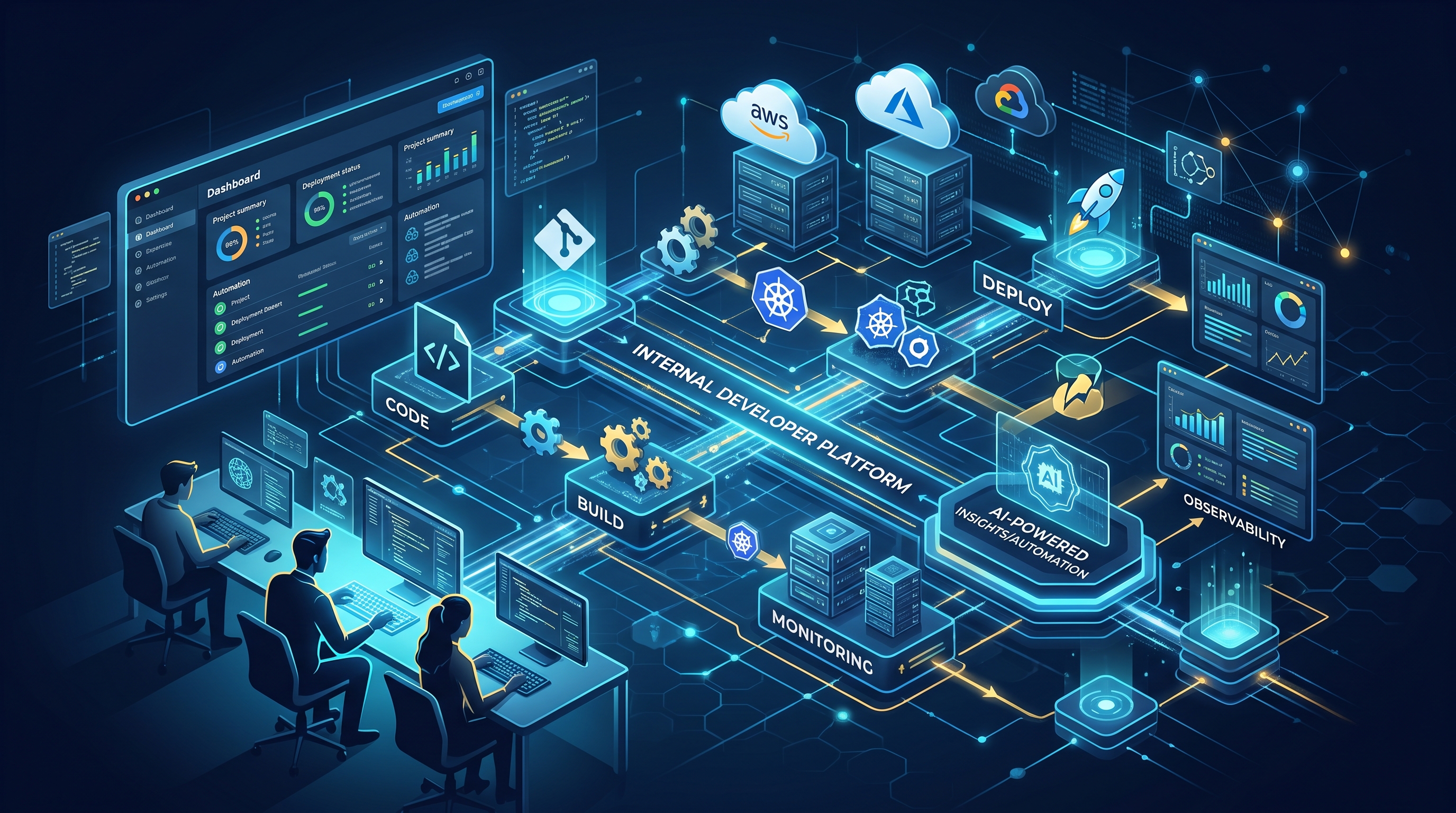
The Hard Truth About Backstage in 2026
After two and a half decades in enterprise finance, I’ve seen more Internal Developer Platform (IDP) initiatives fail than succeed. The common denominator isn’t technology; it’s the assumption that if you build it, they will come. In 2026, the landscape has shifted. Backstage is no longer a novelty; it’s the de facto standard for service catalogs and developer portals. But "standard" doesn’t mean "successful."
Most enterprises treat Backstage as a static documentation site. That is a fundamental error. A platform that engineers don’t use is not a platform; it’s a digital landfill. To make Backstage stick, you must stop thinking about it as a wiki and start treating it as a control plane. The developers who cut their teeth on Kubernetes and microservices don’t want another layer of bureaucracy. They want self-service. They want to spin up a compliant environment in minutes, not days. If your platform requires a ticket, a meeting, and a three-day wait, you have already lost.
From Catalog to Control Plane
The biggest mistake I see teams make is treating the Backstage catalog as a source of truth for documentation rather than a source of truth for automation. In 2026, the catalog must be the trigger for action. When a developer registers a new service, the platform shouldn’t just display it; it should provision the resources, configure the CI/CD pipelines, and inject the necessary security policies.
This requires a shift in how we define entities. We need to move beyond simple YAML definitions. Consider the following structure for a service entity that enables true self-service:
- Metadata: Owner, team, tier, and compliance classification.
- Templates: Pre-approved blueprints for common patterns (e.g., Java Spring Boot, Python FastAPI).
- Lifecycle Hooks: Automated triggers for deployment, monitoring, and logging setup.
- Feedback Loops: Real-time status updates from the underlying Kubernetes clusters or cloud providers.
If your platform cannot automate the provisioning of these resources based on the catalog data, you are merely building a digital brochure. The goal is to reduce the "time to hello world" for a new microservice to under five minutes. If it takes longer, your developers will bypass the platform and use their own scripts, creating shadow IT and security risks.
Integrating Agentic AI for Context
By 2026, the integration of Agentic AI into your IDP is not optional; it is a competitive necessity. However, this doesn’t mean handing over the keys to an LLM. It means providing structured context so that AI agents can assist developers without hallucinating compliance violations.
Backstage provides the perfect substrate for this. By enriching your service catalog with detailed metadata, you enable AI agents to answer complex queries like, "Which services are affected if I change this API contract?" or "How do I deploy this service to the PCI-DSS compliant namespace?"
For a deep dive into how multi-agent systems handle enterprise protocols, I recommend reading our analysis on the Google A2A Protocol for Enterprise Multi-Agent Systems. Understanding how agents communicate is crucial when you are automating workflows across your platform.
The key is to use AI to reduce cognitive load, not to replace engineering judgment. An AI agent should suggest the next step, not make the final decision. This preserves accountability while accelerating velocity. We have seen teams reduce onboarding time for new services by 40% when AI assistants are integrated directly into the Backstage UI, guiding developers through complex configuration steps.
Security and Governance by Default
In regulated industries like finance, security cannot be an afterthought. It must be baked into the platform. This is where the "convention over configuration" principle shines. By default, every service created through Backstage should inherit security policies: static analysis, dependency scanning, and runtime protection.
However, governance often becomes a bottleneck. The solution is to shift security left, but keep it invisible. Developers should not need to manually configure security policies. The platform should enforce them based on the service tier and compliance classification defined in the catalog. If a service is marked as "public-facing," the platform automatically applies stricter rate limiting and WAF rules. If it is "internal," it applies lighter checks.
This approach reduces the security review cycle from weeks to hours. It also ensures that compliance is consistent across thousands of microservices. Manual audits are impossible at this scale. You need automated, continuous compliance checks that feed back into the Backstage dashboard, giving teams visibility into their security posture in real-time.
For more on handling incidents in this automated environment, see our guide on Agentic AI for Incident Response and SRE. When your platform is automated, your incident response must be equally resilient.
Measuring Success: The Metrics That Matter
How do you know if your IDP is working? Do not measure success by the number of teams using Backstage. Measure it by the reduction in toil. Look at these key metrics:
- Lead Time for Changes: Has the time from code commit to production decreased?
- Change Failure Rate: Are deployments failing less often due to better configuration management?
- Mean Time to Recovery (MTTR): How quickly can teams recover from incidents?
- Developer Satisfaction Score: Are engineers happier? Use regular surveys, but focus on specific pain points.
If these metrics are not improving, your platform is not adding value. You must iterate. Remove friction. Simplify the UI. Automate more steps. The goal is to make the right thing the easiest thing.
For those looking to build the underlying infrastructure, ensure your AWS EKS setup is robust. A flaky foundation will undermine even the best platform engineering efforts.
Frequently Asked Questions
Is Backstage suitable for small teams?
For teams with fewer than 5 developers, Backstage is often overkill. The maintenance overhead of a full platform outweighs the benefits. However, for organizations with 20+ teams and 100+ microservices, Backstage becomes essential for maintaining consistency and reducing cognitive load. Start small, but plan for scale.
How do I handle legacy applications in Backstage?
Legacy applications rarely fit neatly into modern service catalogs. The best approach is to create "wrapper" entities for legacy systems. Document their dependencies, owners, and known issues in Backstage, even if you cannot automate their deployment. This brings visibility and reduces tribal knowledge, which is often the biggest risk with legacy code.
Can Backstage replace GitOps tools?
No. Backstage is a portal and a catalog; it is not a deployment engine. It should integrate with GitOps tools like ArgoCD or Flux. Backstage should trigger the GitOps workflow, but the actual synchronization of manifests to Kubernetes should remain in the GitOps controller. This separation of concerns ensures robustness and auditability.
What is the best way to onboard new teams?
Do not force new teams to adopt Backstage immediately. Instead, provide a "golden path" template. Create a pre-configured repository with a Backstage entity definition, a CI/CD pipeline, and a deployment manifest. When a new team starts, they simply clone this template. This reduces initial friction and demonstrates the value of the platform through immediate utility, not mandatory compliance.