Production-Ready AI Agents: Why Most Projects Fail (And How to Be the Exception)
The enterprise deployment gap explained: governance patterns, data quality requirements, integration architecture, and organizational change management from teams that shipped AI agents to production.

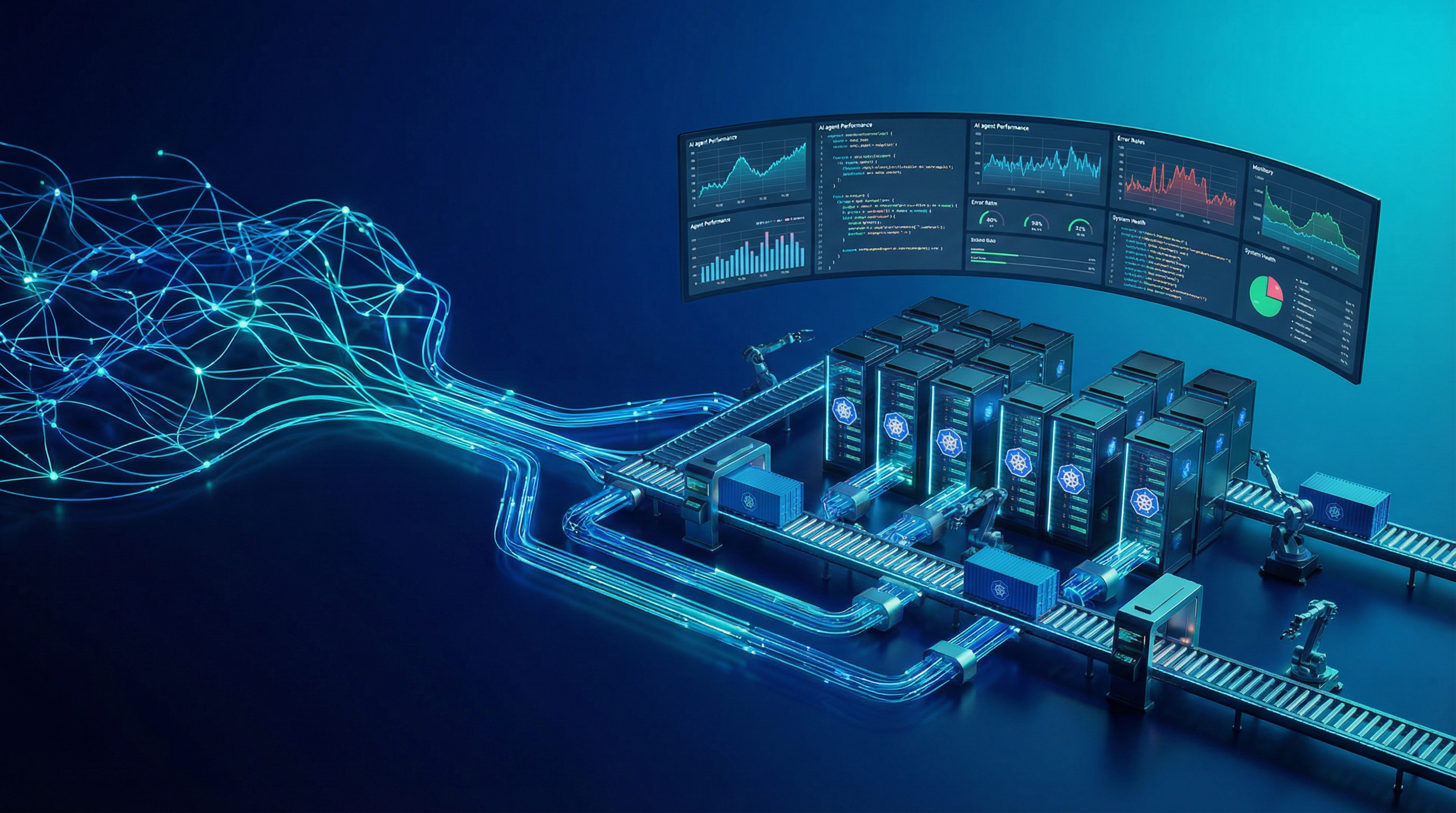
The Deployment Gap: Why Most AI Agent Projects Fail
Here's the uncomfortable truth: most AI agent projects never reach production. While a large share of enterprises plan autonomous agent deployment within the next couple of years, only a minority have shipped agents that solve real business problems reliably.
The gap isn't about AI quality. Claude, GPT-4, and open models are powerful enough. The gap is about production readiness—the engineering discipline required to take an AI prototype and turn it into a system that runs 24/7, handles edge cases, complies with governance, and delivers measurable ROI.
In Rajesh Gheware's 25 years building systems at JPMorgan Chase, Deutsche Bank, and Morgan Stanley, I've watched this pattern repeat across every technology wave: blockchain, microservices, Kubernetes, cloud-native. The teams that win aren't the smartest engineers—they're the ones who understand that production success requires governance, data quality, and organizational alignment before feature velocity.
AI agents are no different. Harder, actually, because you can't git rollback an agent hallucination.
Governance First: The Missing Foundation
Most teams build like this: prototype → add features → monitor → govern (if time permits). Production-ready teams flip the order: governance → data → features → monitoring.
Why governance first? Because the earlier you enforce governance, the less technical debt you accumulate. An agent decision that violates policy at month 1 costs a code review. At month 6, after 100K decisions, it costs a complete rewrite.
Five governance pillars for production AI agents:
- Decision Authority & Escalation: Which decisions can an agent make autonomously? Which require human review? Which are forbidden? Document this as code (policy-as-code using OPA/Rego or similar).
- Audit Trail & Explainability: Every agent decision must be logged with reasoning. "Agent chose supplier X because cost was 12% lower and delivery time < 48h." Not just the decision, but the why.
- Financial Controls: Budget limits per agent, per workflow, per hour. A rogue agent shouldn't be able to spend your annual budget on API calls in 10 minutes.
- Compliance & Data Protection: GDPR, HIPAA, SOX compliance aren't afterthoughts. Embed them into agent prompts, data access policies, and audit logging from day one.
- Rollback & Kill Switch: You must be able to disable an agent in < 5 minutes, revert decisions made in the last 24h, and understand the blast radius.
Teams that invest one sprint in a governance framework before touching the agent code consistently reach production faster and avoid audit failures.
Data Quality: The Silent Killer
A production AI agent is a closed-loop system: it observes data → makes decisions → observes outcomes → corrects itself. If the data flowing into that loop is garbage, the agent becomes a sophisticated garbage processor.
The data quality checklist for production AI agents:
- Freshness: Is data < 1 minute stale for real-time agents? < 1 hour for batch agents? Define SLOs per data source.
- Completeness: What's the acceptable missing-data rate? 0.1%? 1%? Codify it. When missed, trigger alerts.
- Accuracy: Implement data validation pipelines. Sample audits. Drift detection. If customer email format changes, agent sees it and alerts your data team.
- Consistency: If "customer_id" means different things across databases, agents make inconsistent decisions. Data contracts (using tools like Great Expectations or dbt tests) prevent this.
- Context Window Fit: LLMs have finite context. Ensure agent's context never exceeds 70% of the model's limit (reserve 30% for reasoning and output).
I've seen teams deploy agents that made perfect decisions in the lab but failed in production because upstream data pipelines drifted. One sprint of data quality investment pays for itself in weeks of reduced agent errors.
Integration Patterns: API, Events, and State Management
Agents don't live in isolation. They need to:
- Query data from CRMs, data warehouses, APIs
- Execute actions (approve orders, send emails, update records)
- Handle failures and retries gracefully
- Maintain conversation state across sessions
Three production patterns we teach at gheWARE Agentic AI workshops:
Pattern 1: API Gateway with Circuit Breaker
Agents call external APIs. Rate limiting, timeout, retry logic, and circuit breakers must be transparent to the agent. Use an API gateway (Kong, Traefik) as a buffer. If the CRM API is down, the circuit breaker trips, agent waits, retries, or escalates. No cascading failures.
Pattern 2: Event-Driven Workflows
Instead of synchronous API calls, emit events. "Order placed" → agent processes asynchronously → publishes "decision made" event → downstream systems react. Decouples agent from system topology. Easier to scale, recover, and audit.
Pattern 3: Distributed Transaction Coordination
An agent updates a customer record AND publishes a notification AND schedules a follow-up email. If any step fails, all must roll back. Use saga pattern (choreography or orchestration) to manage this reliably. Tool like Temporal or Cadence handle this at scale.
Observability & Monitoring: From Logs to Insights
Traditional observability (logs, metrics, traces) isn't enough for agents. You need agent-specific observability:
- Decision Telemetry: Which decisions did the agent make? What was its reasoning? How confident was it?
- Hallucination Detection: Did the agent cite a fact that doesn't exist in your data? Flag it immediately.
- Drift Detection: Is agent behavior changing over time? Are outcomes getting worse? Alert before SLA breach.
- Cost Tracking: How much is this agent costing (API calls, compute, time)? Per decision? Is ROI degrading?
Tools like Langfuse (for LLM observability) + Prometheus (for custom metrics) + Jaeger (for distributed traces) create a complete picture. Our Agentic AI training includes hands-on labs with this exact stack.
The Organizational Change Layer: The Hardest Part
Technical readiness doesn't guarantee deployment success. You need organizational alignment:
- Executive alignment: Does the CFO understand ROI? Does the CTO own the roadmap? Misalignment kills projects.
- Team upskilling: Your engineers understand Docker and Kubernetes. Do they understand prompt engineering, RAG architecture, agent observability? Probably not. Invest in training.
- Change management: Will this agent replace someone's job? Fear kills adoption. Be transparent. Retrain. Reposition people to higher-value work.
- Process redesign: An agent that automates a broken process just scales the broken-ness. Redesign first, then automate.
How to Bridge the Deployment Gap: The 90-Day Roadmap
Month 1: Foundation (Weeks 1-4)
- Weeks 1-2: Governance framework. Define decision authority, audit requirements, compliance needs.
- Weeks 3-4: Data quality audit. Which data sources feed the agent? Are they production-ready?
Month 2: Architecture (Weeks 5-8)
- Design integration patterns (APIs, events, state management)
- Set up observability stack (Langfuse + Prometheus)
- Prototype agent workflows (LangGraph, LangChain, or similar)
Month 3: Production (Weeks 9-12)
- Canary deployment to 1% traffic
- Monitor decision quality, cost, latency
- Scale gradually to 100%
- Document runbooks for incident response
Teams following this roadmap average 8-12 weeks faster to production than those building features first.
Build Production-Ready AI Agents With Us
In 2026, the bottleneck isn't AI quality—it's production engineering discipline. Your teams know Kubernetes, Docker, and CI/CD. They need to learn AI agent architecture, governance patterns, and observability at the same depth.
That's exactly what we teach at gheWARE's Agentic AI Workshop (5-day, 119 hands-on labs):
- LangGraph multi-agent orchestration (not toy examples—production patterns)
- RAG pipelines on Kubernetes with vector databases
- MCP servers for enterprise data access
- Observability with Langfuse (the tool teams actually use)
- Security, governance, and cost control patterns
Proven Quality: Rated 4.91/5.0 on Oracle University.
Zero-Risk Guarantee: Your team must achieve at least 40% faster deployments within 90 days. If not, 100% refund + $1,000 for wasting your time. Never paid out in 8 years.