
Why Your Current On-Call Model Is Broken
In Rajesh Gheware's 25 years building systems at JPMorgan Chase, Deutsche Bank, and Morgan Stanley, I watched on-call rotations become a form of slow torture for senior engineers. The pattern never changed: pipeline breaks at 2 AM, PagerDuty fires, engineer groggily digs through logs, finds the error, fixes it, goes back to sleep — only to repeat the same incident six weeks later when someone else forgets the lesson.
The economics are brutal. A senior DevOps engineer costs $150K-$300K annually. Every 3 AM incident consumes 2-4 hours of their time — not just the incident itself, but the cognitive recovery cost the next day. A team doing 10 incidents per month is burning roughly $60,000-$120,000 per year in on-call overhead alone, before accounting for the human cost of burnout.
But here's what's changed in 2026: AI agents have crossed the threshold from "interesting experiment" to "production-proven capability." The same pattern-recognition that makes LLMs good at writing code makes them exceptional at recognizing failure patterns — and increasingly good at executing the right fix without human approval.
CircleCI and Harness have both shipped "autopilot" modes where AI agents not only detect pipeline failures but automatically diagnose and remediate them. GitHub Actions now has AI-assisted runbook execution. The shift from copilot to autopilot is no longer a marketing claim — it's production reality.
The question isn't whether to add AI to your pipeline. It's how quickly you can move from AI-recommends to AI-acts-autonomously.
The Anatomy of a Self-Healing Pipeline
A self-healing pipeline has five distinct layers, each with specific AI agent responsibilities:
Layer 1: Continuous Telemetry Collection
Every pipeline event generates data: build times, test pass/fail rates, deployment durations, error logs, resource utilization, and post-deployment metrics. The healing pipeline starts by collecting this telemetry with sufficient granularity to enable pattern detection.
# Prometheus metrics for pipeline health monitoring
- job_name: 'ci_pipeline'
  static_configs:
    - targets: ['pipeline-metrics.internal:9090']
  metrics_path: /metrics

# Key metrics to track for self-healing:
# - pipeline_build_duration_seconds (anomaly detection)
# - test_failure_rate (threshold alerting)
# - deployment_rollback_count (quality signal)
# - pod_restart_count (stability signal)
# - error_log_rate (anomaly baseline)
Layer 2: Anomaly Detection and Alert Triage
Raw alerts are noise. A pipeline that generates 500 alert events per day overwhelms any human — let alone an AI. The second layer uses AI to triage alerts: classify by severity, correlate with similar past incidents, and suppress non-actionable duplicates.
This is exactly what Keep (keephq/keep) solves — an open-source AIOps alert management platform that correlates alerts, deduplicates noise, and uses AI to identify the root cause signal from the noise. When teams struggle with alert fatigue, Keep is the first tool gheWARE recommends.
Layer 3: AI Diagnostic Agent
Once an alert is flagged as actionable, the diagnostic agent kicks in. This agent reads build logs, error traces, and historical incident data, then uses an LLM to generate a root cause hypothesis. The agent doesn't guess — it references known failure patterns from your incident history database.
Layer 4: Autonomous Remediation Engine
For known failure patterns, the remediation engine executes pre-approved playbooks without human intervention. These include: retrying failed jobs, rolling back broken deployments, restarting crashed pods, scaling up exhausted resources, or rerunning failed test suites with different parameters.
Layer 5: Human Escalation with Full Context
For novel failures or patterns outside the AI's confidence threshold, the system escalates — but with complete context. Instead of "pipeline is broken," the human gets: "Pipeline failed at stage 3 (integration tests). Root cause hypothesis: OAuth token expired in test environment. Confidence: 87%. Already tried: token refresh (failed). Needs: manual OAuth re-authentication in test environment."
Architecture: AI Agents as Native Pipeline Components
You might think of AI agents as add-ons to your existing pipeline. But the more powerful model treats them as first-class pipeline citizens — components with well-defined responsibilities, inputs, and outputs.
Here's how the architecture maps to real tooling in 2026:
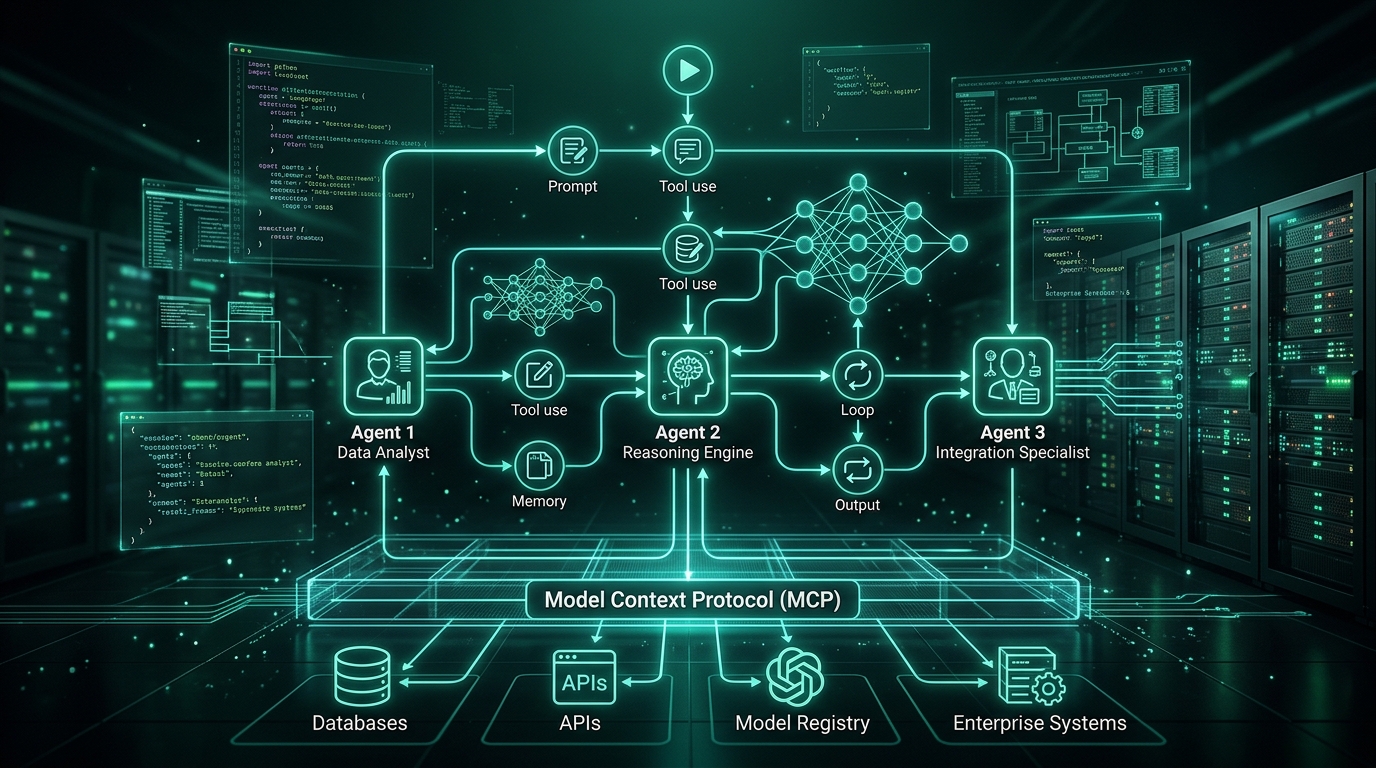
Multi-Agent Pipeline Architecture
# Pipeline Architecture with AI Agent Integration
# CI/CD Tool (GitHub Actions / CircleCI / Harness)
#       │
#       ▼
# ┌─────────────────┐
# │  Telemetry Agent │ ← Prometheus + OpenTelemetry
# └────────┬────────┘
#          │ metrics, traces, logs
#          ▼
# ┌─────────────────┐
# │  Alert Triage   │ ← Keep (keephq/keep)
# │     Agent       │   Deduplication + correlation
# └────────┬────────┘
#          │ classified alerts
#          ▼
# ┌─────────────────┐
# │   Diagnostic    │ ← LLM + incident history
# │     Agent       │   Root cause hypothesis
# └────────┬────────┘
#          │ confidence score + remediation plan
#          ▼
# ┌─────────────────┐
# │  Remediation    │ ← AutoPilotOps / Custom Runbooks
# │     Agent       │   Autonomous fix execution
# └────────┬────────┘
#          │ outcome + escalation if needed
#          ▼
# ┌─────────────────┐
# │  Escalation     │ ← PagerDuty / Slack
# │    Handler      │   Human-in-the-loop for novel failures
# └─────────────────┘
The critical design principle: each agent has a specific, bounded responsibility. The telemetry agent doesn't diagnose. The diagnostic agent doesn't execute fixes. This separation of concerns means you can improve each agent independently and reason about failure modes clearly.
When to Use LangGraph for Pipeline Orchestration
For complex multi-agent pipelines, LangGraph provides the state management and orchestration layer that makes multi-agent coordination tractable. The supervisor pattern in LangGraph works particularly well here: a supervisor agent routes pipeline events to the appropriate specialized agent (triage, diagnostic, remediation) based on the current pipeline state.
If you're building a production self-healing pipeline, I strongly recommend the LangGraph supervisor pattern as your orchestration backbone. Our Agentic AI Workshop covers this pattern in depth with hands-on labs building multi-agent systems that handle real production scenarios.
Building the Self-Healing Pipeline: Code Walkthrough
Let's build a concrete self-healing pipeline component. We'll use a Python-based AI agent that monitors Prometheus metrics, detects anomalies, and executes remediation — the core pattern used by AutoPilotOps (kelomo2502/AutoPilotOps) and similar production systems.
Step 1: Pipeline Health Monitor Agent
# pipeline_monitor.py
# AI Agent that monitors CI/CD pipeline health via Prometheus
# and triggers self-healing actions based on anomaly detection

import requests
import json
from datetime import datetime
from typing import Dict, List, Optional

class PipelineHealthAgent:
    """
    Monitors pipeline metrics and determines when
    self-healing actions should be triggered.
    """

    def __init__(self, prometheus_url: str, alert_manager_url: str):
        self.prometheus_url = prometheus_url
        self.alert_manager_url = alert_manager_url
        self.anomaly_threshold = 2.5  # standard deviations
        self.healing_actions = {
            'high_build_time': self._retry_build,
            'test_flakiness': self._rerun_flaky_tests,
            'deployment_rollback': self._rollback_deployment,
            'pod_crash_loop': self._restart_pod_with_backoff,
            'resource_exhaustion': self._scale_resources,
        }

    def check_pipeline_health(self) -> List[Dict]:
        """Query Prometheus for pipeline health metrics."""
        queries = {
            'build_duration': 'histogram_quantile(0.95, pipeline_build_duration_seconds)',
            'failure_rate': 'rate(pipeline_failed_jobs_total[5m])',
            'test_flakiness': 'rate(tests_flaky_total[10m])',
            'pod_restarts': 'rate(kube_pod_restart_total[5m])',
        }

        results = {}
        for metric_name, query in queries.items():
            response = requests.get(
                f"{self.prometheus_url}/api/v1/query",
                params={'query': query}
            )
            results[metric_name] = response.json()

        return self._detect_anomalies(results)

    def _detect_anomalies(self, metrics: Dict) -> List[Dict]:
        """Use statistical anomaly detection + LLM classification."""
        anomalies = []

        # Statistical anomaly detection (baseline)
        for metric, data in metrics.items():
            if data['status'] == 'success' and data['data']['result']:
                value = float(data['data']['result'][0]['value'][1])
                baseline = self._get_baseline(metric)

                if value > baseline * self.anomaly_threshold:
                    anomalies.append({
                        'metric': metric,
                        'current_value': value,
                        'baseline': baseline,
                        'deviation': (value - baseline) / baseline,
                        'severity': self._classify_severity(metric, value, baseline)
                    })

        # Use LLM to classify and prioritize anomalies
        if anomalies:
            classified = self._llm_classify_anomalies(anomalies)
            return classified

        return []

    def _llm_classify_anomalies(self, anomalies: List[Dict]) -> List[Dict]:
        """Use LLM to classify anomalies and map to healing actions."""
        # In production: integrate with your LLM (OpenAI/Gemini/Claude)
        # Here we show the pattern:
        prompt = f"""
        Classify these pipeline anomalies and map each to a healing action.
        Anomalies: {json.dumps(anomalies, indent=2)}

        For each anomaly, return:
        1. root_cause_hypothesis (string)
        2. recommended_action (from: retry_build, rerun_tests, rollback, restart_pod, scale_resources)
        3. confidence_score (0-1)
        4. can_auto_heal (boolean - true if confidence > 0.8 and action is approved)
        """

        # LLM call would go here (use your preferred provider)
        # response = llm.generate(prompt)

        # For this example, use rule-based classification
        classified = []
        for anomaly in anomalies:
            action_map = {
                'build_duration': 'retry_build',
                'failure_rate': 'rerun_tests',
                'test_flakiness': 'rerun_tests',
                'pod_restarts': 'restart_pod_with_backoff',
            }

            classified.append({
                **anomaly,
                'action': action_map.get(anomaly['metric'], 'escalate'),
                'root_cause': f"{anomaly['metric']} exceeded threshold by {anomaly['deviation']:.1%}",
                'confidence': 0.85 if anomaly['severity'] != 'critical' else 0.6,
                'can_auto_heal': anomaly['severity'] != 'critical'
            })

        return classified

    def trigger_healing(self, anomaly: Dict) -> Dict:
        """Execute the appropriate healing action."""
        action = anomaly.get('action', 'escalate')

        if not anomaly.get('can_auto_heal', False):
            return self._escalate_to_human(anomaly)

        healing_fn = self.healing_actions.get(action)
        if healing_fn:
            result = healing_fn(anomaly)
            return {
                'status': 'healed',
                'action_taken': action,
                'result': result,
                'anomaly': anomaly
            }

        return {'status': 'escalated', 'reason': 'unknown_action', 'anomaly': anomaly}

    def _retry_build(self, anomaly: Dict) -> Dict:
        """Retry a failed CI build."""
        # Integration with your CI tool (GitHub Actions / CircleCI)
        # POST to CI API to trigger retry
        return {'action': 'build_retry', 'status': 'success'}

    def _rerun_flaky_tests(self, anomaly: Dict) -> Dict:
        """Rerun only flaky tests with different parameters."""
        # Identify flaky tests, rerun with --flaky-tests-attempts=3
        return {'action': 'flaky_tests_rerun', 'status': 'success'}

    def _rollback_deployment(self, anomaly: Dict) -> Dict:
        """Rollback to previous stable deployment."""
        # ArgoCD / Flux rollback API call
        return {'action': 'deployment_rollback', 'status': 'initiated'}

    def _restart_pod_with_backoff(self, anomaly: Dict) -> Dict:
        """Restart crashed pod with exponential backoff."""
        # kubectl rollout restart with backoff policy
        return {'action': 'pod_restart_with_backoff', 'status': 'success'}

    def _scale_resources(self, anomaly: Dict) -> Dict:
        """Scale up resources to handle load."""
        # HPA / VPA adjustment
        return {'action': 'resource_scale_up', 'status': 'success'}

    def _escalate_to_human(self, anomaly: Dict) -> Dict:
        """Escalate to on-call engineer with full context."""
        # PagerDuty / Slack integration
        return {'status': 'escalated', 'anomaly': anomaly}

    def _get_baseline(self, metric: str) -> float:
        """Get baseline from historical data — use Prometheus range queries."""
        return 1.0  # simplified

    def _classify_severity(self, metric: str, current: float, baseline: float) -> str:
        deviation = (current - baseline) / baseline
        if deviation > 5.0:
            return 'critical'
        elif deviation > 3.0:
            return 'high'
        elif deviation > 2.0:
            return 'medium'
        return 'low'
Step 2: Autonomous Incident Response with LangGraph
For more complex healing scenarios, let's use LangGraph to orchestrate the full diagnostic → remediation → escalation flow:
# self_healing_pipeline.py
# LangGraph-based autonomous pipeline healing multi-agent system

from langgraph.graph import StateGraph, END
from typing import TypedDict, List, Dict
from enum import Enum

class PipelineState(TypedDict):
    incident: Dict
    diagnostics: List[Dict]
    healing_actions: List[Dict]
    escalation_needed: bool
    resolution: str

class PipelineHealingGraph:
    """
    Multi-agent pipeline healing using LangGraph supervisor pattern.
    Agents: Monitor → Triage → Diagnose → Remediate → Escalate
    """

    def __init__(self):
        self.graph = self._build_graph()

    def _build_graph(self) -> StateGraph:
        workflow = StateGraph(PipelineState)

        # Add nodes for each agent
        workflow.add_node("monitor", self.monitor_agent)
        workflow.add_node("triage", self.triage_agent)
        workflow.add_node("diagnose", self.diagnose_agent)
        workflow.add_node("remediate", self.remediate_agent)
        workflow.add_node("escalate", self.escalate_agent)

        # Define edges with conditional routing
        workflow.add_edge("monitor", "triage")
        workflow.add_edge("triage", "diagnose")

        # Conditional routing after diagnosis
        workflow.add_conditional_edges(
            "diagnose",
            self.should_heal,
            {
                "heal": "remediate",
                "escalate": "escalate"
            }
        )

        workflow.add_edge("remediate", END)
        workflow.add_edge("escalate", END)

        workflow.set_entry_point("monitor")
        return workflow.compile()

    def should_heal(self, state: PipelineState) -> str:
        """Decide whether to heal autonomously or escalate."""
        diagnostics = state.get('diagnostics', [])
        confidence = sum(d.get('confidence', 0) for d in diagnostics) / max(len(diagnostics), 1)

        if confidence >= 0.8 and not state['escalation_needed']:
            return "heal"
        return "escalate"

    def monitor_agent(self, state: PipelineState) -> PipelineState:
        """Monitor pipeline metrics and detect anomalies."""
        # Check Prometheus, detect anomalies
        anomalies = self.pipeline_monitor.check_pipeline_health()

        if anomalies:
            state['incident'] = anomalies[0]

        return state

    def triage_agent(self, state: PipelineState) -> PipelineState:
        """Triage alert: classify severity, check if known pattern."""
        incident = state.get('incident', {})

        # Use Keep-style alert correlation
        correlated = self.alert_correlator.correlate(incident)

        if correlated['is_suppressed']:
            state['resolution'] = 'suppressed_noise'
            return state

        state['escalation_needed'] = correlated['escalation_needed']
        return state

    def diagnose_agent(self, state: PipelineState) -> PipelineState:
        """Diagnose root cause using LLM + incident history."""
        incident = state.get('incident', {})

        # Query ChromaDB for similar past incidents
        similar_incidents = self.incident_db.search(
            query=f"pipeline failure {incident.get('metric')}",
            n_results=3
        )

        # LLM generates root cause hypothesis
        diagnosis = self.llm_diagnostician.diagnose(
            incident=incident,
            similar_incidents=similar_incidents
        )

        state['diagnostics'] = [diagnosis]
        return state

    def remediate_agent(self, state: PipelineState) -> PipelineState:
        """Execute autonomous healing actions."""
        diagnostics = state.get('diagnostics', [])

        actions_taken = []
        for diag in diagnostics:
            action = self.healing_engine.execute(
                healing_plan=diag['healing_plan']
            )
            actions_taken.append(action)

        state['healing_actions'] = actions_taken
        state['resolution'] = 'auto_healed'
        return state

    def escalate_agent(self, state: PipelineState) -> PipelineState:
        """Escalate to human with full diagnostic context."""
        # Format escalation message with all context
        escalation_msg = self.format_escalation(state)

        # Send to PagerDuty / Slack
        self.notification.send(
            channel='on-call',
            message=escalation_msg,
            priority='high'
        )

        state['resolution'] = 'human_escalated'
        return state

    def run(self, incident_data: Dict) -> Dict:
        """Run the healing graph on a specific incident."""
        initial_state = PipelineState(
            incident=incident_data,
            diagnostics=[],
            healing_actions=[],
            escalation_needed=False,
            resolution=""
        )

        result = self.graph.invoke(initial_state)
        return result

# Usage
healing_graph = PipelineHealingGraph()
result = healing_graph.run({
    'metric': 'build_duration',
    'current_value': 450,
    'baseline': 120,
    'deviation': 3.75
})

print(f"Resolution: {result['resolution']}")
print(f"Actions taken: {result['healing_actions']}")
This is the exact pattern used in production by teams running AutoPilotOps-style systems. The key insight: the LLM doesn't just classify — it generates a healing plan that the remediation agent executes against known, approved runbooks.
AI-Powered Root Cause Analysis in Practice
The hardest part of self-healing isn't fixing known problems — it's diagnosing novel ones. When the AI agent encounters a failure pattern it hasn't seen before, it needs to reason through the evidence, generate hypotheses, and either confirm or eliminate each one.
Here's how to build a root cause analysis agent that actually works in production:
Building an LLM-Powered RCA Agent
# rca_agent.py
# LLM-powered Root Cause Analysis for pipeline failures

import json
from typing import List, Dict, Optional

class RCAAgent:
    """
    Uses an LLM to perform root cause analysis on pipeline failures.
    Reads build logs, error traces, and historical incidents to
    generate a ranked list of probable root causes.
    """

    def __init__(self, llm_client, incident_db):
        self.llm = llm_client
        self.incident_db = incident_db

    def analyze(self, failure_data: Dict) -> Dict:
        """
        Main RCA entry point.
        failure_data contains: build logs, error trace,
        metrics snapshot, recent changes
        """

        # Step 1: Gather context from multiple sources
        context = self._gather_context(failure_data)

        # Step 2: Generate hypotheses using LLM
        hypotheses = self._generate_hypotheses(context)

        # Step 3: Score and rank hypotheses
        ranked_causes = self._rank_hypotheses(hypotheses, context)

        # Step 4: Generate remediation recommendations
        recommendations = self._generate_recommendations(ranked_causes, context)

        return {
            'primary_cause': ranked_causes[0] if ranked_causes else None,
            'secondary_causes': ranked_causes[1:3],
            'confidence': self._calculate_confidence(ranked_causes),
            'recommendations': recommendations,
            'similar_past_incidents': self._find_similar_incidents(ranked_causes)
        }

    def _gather_context(self, failure_data: Dict) -> Dict:
        """Aggregate context from logs, metrics, and recent changes."""

        # 1. Build log analysis
        build_log = failure_data.get('build_log', '')
        error_patterns = self._extract_error_patterns(build_log)

        # 2. Metrics context
        metrics = failure_data.get('metrics', {})

        # 3. Recent changes (Git commits, config changes, deployments)
        recent_changes = self._get_recent_changes(failure_data)

        # 4. Historical similar failures
        similar = self._find_similar_failures(failure_data)

        return {
            'error_patterns': error_patterns,
            'metrics': metrics,
            'recent_changes': recent_changes,
            'similar_failures': similar,
            'build_log_excerpt': build_log[-2000:]  # last 2KB of logs
        }

    def _generate_hypotheses(self, context: Dict) -> List[Dict]:
        """Use LLM to generate and score root cause hypotheses."""

        prompt = f"""
        You are a senior DevOps engineer with 20+ years of experience
        troubleshooting complex CI/CD pipeline failures.

        Given the following failure context, generate the top 5 most
        probable root causes. For each cause provide:
        - cause_name (string)
        - likelihood (high/medium/low)
        - confidence_score (0.0-1.0)
        - evidence_supporting (list of strings)
        - evidence_against (list of strings)
        - recommended_investigation_step (string)

        Failure Context:
        {json.dumps(context, indent=2)}

        Consider these common failure categories:
        - Network/dns issues (service dependencies unreachable)
        - Resource exhaustion (CPU/memory/disk)
        - Authentication/secret issues (expired tokens, missing secrets)
        - Code changes (recent commits that could have caused failure)
        - Infrastructure drift (config changes, version mismatches)
        - External dependency failures (third-party APIs, package registries)
        - Concurrency/race conditions (parallel job conflicts)
        - Flaky tests (non-deterministic test behavior)
        """

        response = self.llm.generate(prompt)

        # Parse LLM response into structured hypotheses
        # In production: use structured output parsing
        hypotheses = self._parse_llm_hypothesis_response(response)

        return hypotheses

    def _rank_hypotheses(self, hypotheses: List[Dict], context: Dict) -> List[Dict]:
        """Refine hypothesis ranking using additional evidence."""

        # Cross-reference with similar past incidents
        for hypothesis in hypotheses:
            similar = self._find_matching_incidents(hypothesis['cause_name'])
            if similar:
                hypothesis['historical_confidence'] = len(similar) / 10
                hypothesis['similar_incidents'] = similar[:3]

        # Sort by combined confidence score
        ranked = sorted(
            hypotheses,
            key=lambda h: (
                h.get('confidence_score', 0) * 0.6 +
                h.get('historical_confidence', 0) * 0.4
            ),
            reverse=True
        )

        return ranked

    def _generate_recommendations(self, ranked_causes: List[Dict], context: Dict) -> List[str]:
        """Generate actionable remediation recommendations."""

        recommendations = []

        for cause in ranked_causes[:3]:
            rec = f"Investigate {cause['cause_name']}: {cause.get('recommended_investigation_step', 'N/A')}"
            recommendations.append(rec)

        return recommendations

# Integration with your incident management
rca = RCAAgent(llm_client=my_llm, incident_db=incident_chromadb)
result = rca.analyze({
    'build_log': open('/path/to/build.log').read(),
    'metrics': prometheus_query_result,
    'recent_changes': git_recent_commits
})

print(f"Root cause: {result['primary_cause']['cause_name']}")
print(f"Confidence: {result['confidence']:.0%}")
print(f"Recommended fix: {result['recommendations'][0]}")
The key to making RCA agents work in production is grounding them in your specific incident history. The LLM generates hypotheses, but the ranking is informed by your team's actual past failures stored in ChromaDB. This combination — LLM reasoning + organizational memory — is what separates toy demos from production-grade RCA.
For teams running Kubernetes, our AIOps on Kubernetes guide covers the observability prerequisites you need before self-healing can work — because an AI agent can't heal what it can't see.
Frequently Asked Questions
What is a self-healing DevOps pipeline?
A self-healing DevOps pipeline uses AI agents to automatically detect failures, diagnose root causes, and apply fixes — without human intervention. When a build fails, test suite breaks, or deployment crashes, the AI agent analyzes logs, identifies the cause, and either auto-remediates or provides precise fix guidance to the team.
How do AI agents detect pipeline failures?
AI agents continuously monitor pipeline telemetry — build logs, test results, deployment metrics, and error rates — using pattern matching, anomaly detection, and historical failure correlation. Tools like Prometheus, Grafana, and OpenTelemetry feed data to AI agents that classify failure types and trigger appropriate remediation playbooks.
What's the difference between AI-assisted DevOps and fully autonomous pipeline healing?
AI-assisted DevOps means AI recommends actions and humans approve them. Fully autonomous self-healing means the AI agent executes fixes directly — rolling back bad deployments, retrying failed jobs, restarting crashed pods, or escalating with full context — all without human touch. The spectrum goes from copilot (AI recommends, human does) to autopilot (AI acts autonomously).
Which tools enable self-healing DevOps pipelines?
Key tools include: Prometheus + AlertManager for metrics and alerting; Grafana AI for anomaly detection; Keep (keephq/keep) for AIOps alert correlation; AutoPilotOps (kelomo2502/AutoPilotOps) for GitOps + AI healing; LangGraph for multi-agent pipeline orchestration; and custom LLM-powered runbook agents that read logs and execute remediation steps.
Can self-healing pipelines actually replace on-call engineers?
Not entirely — but they dramatically reduce on-call burden. AI agents handle the 80% of incidents that are known patterns (OOM kills, disk full, broken builds, flaky tests). Complex, novel failures still need human judgment. Think of AI as a tireless junior DevOps engineer who handles the routine calls 24/7, letting senior engineers focus on architectural decisions and rare edge cases.
Conclusion
The shift from AI-assisted DevOps to autonomous self-healing pipelines isn't a futuristic vision — it's a 2026 production reality. Teams running CircleCI autopilot mode, Harness AI, and custom LangGraph-based healing systems are already seeing dramatic reductions in MTTR and on-call burden.
The path forward isn't to wait for the "perfect" AI agent — it's to start building now with the tools that exist. Begin with alert correlation (Keep), add statistical anomaly detection (Prometheus + Grafana AI), layer in LLM-powered diagnostics, and progressively expand autonomous remediation as your confidence grows.
The engineers who will thrive in the next era of DevOps aren't the ones who resist AI agents — they're the ones who learn to design, train, and oversee them. The autonomous pipeline doesn't eliminate the need for senior engineers; it changes what they do from reactive firefighting to proactive system design.
At gheWARE, our Agentic AI Workshop covers multi-agent pipeline orchestration using LangGraph, AIOps observability patterns, and autonomous remediation system design — the exact skills you need to build production self-healing pipelines. If your team is still doing 3 AM on-call rotations, the AI already exists to fix that. The question is whether you're willing to build it.