
I’ve spent 25 years watching infrastructure evolve from monolithic mainframes to distributed Kubernetes clusters. The pattern is always the same: when a technology becomes complex enough to fail silently, you build a layer to observe it. We are now in that phase with Agentic AI.
For the first wave of LLM integration, we treated models as black-box APIs. We logged inputs and outputs, calculated latency, and moved on. But agents? Agents are different. They are stateful, iterative, and often recursive. When an agent loops three times because it misinterpreted a tool’s output, a simple request-response log doesn’t tell you *why*. You need full trace fidelity.
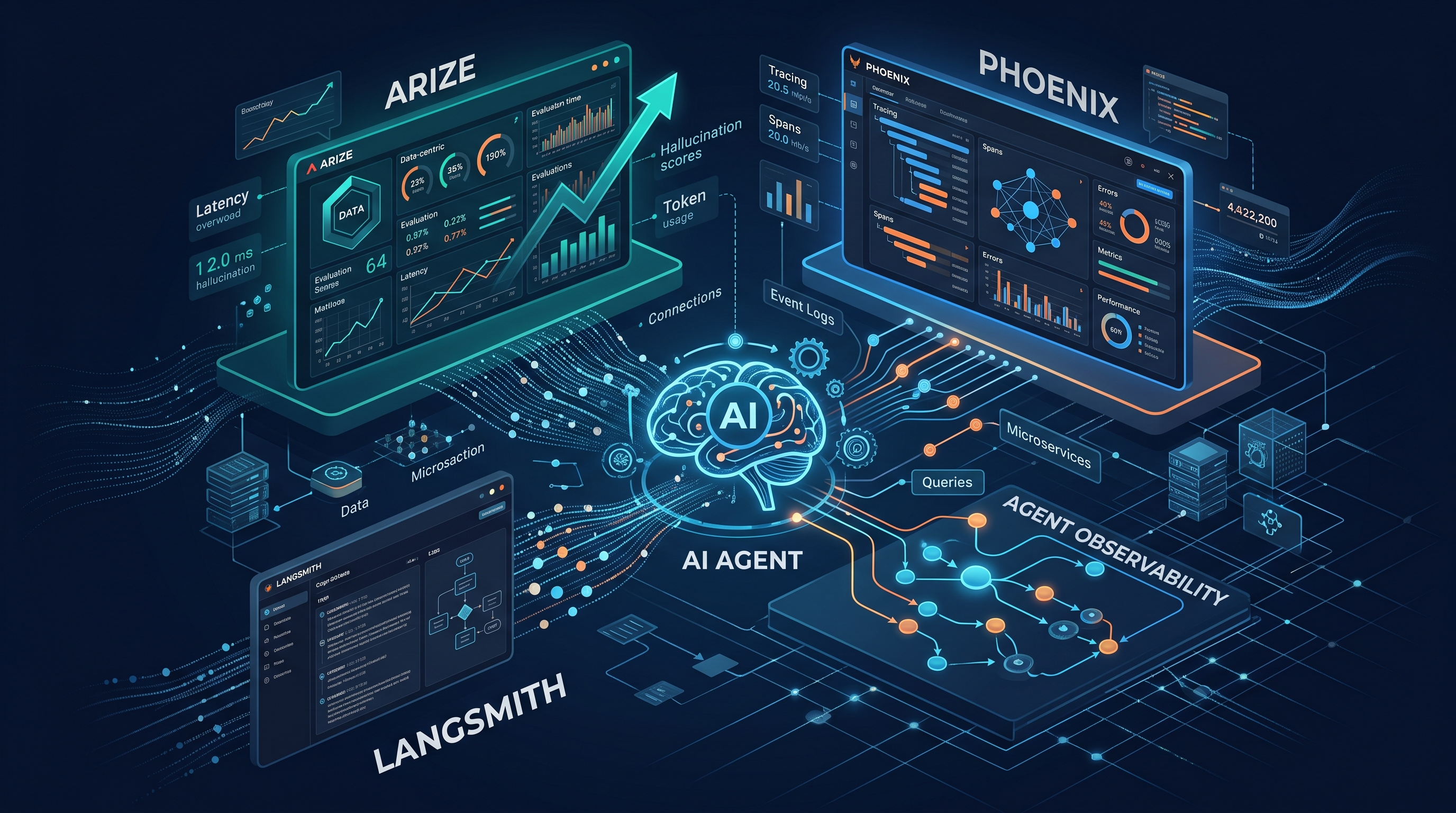
This is where the market for agent observability splits. The dominant player, LangSmith, offers a polished, closed-loop experience that is hard to ignore for early adopters. But for enterprise environments running multi-agent systems with strict security and compliance requirements, the limitations become glaring. I’ve evaluated Arize Phoenix, LangSmith, and several other competitors, and the choice isn’t about which tool is "best" in a vacuum—it’s about which architecture fits your operational reality.
The Fidelity Gap: Why LangSmith Isn’t Enough for Enterprise Scale
LangSmith is undeniably the most user-friendly platform for tracing. Its integration with the LangChain ecosystem is seamless, and the UI is intuitive. However, "easy" often comes at the cost of depth. In my experience managing large-scale financial workflows at institutions like JPMorgan Chase, I’ve found that LangSmith’s default tracing often abstracts away the very details engineers need to debug complex agent behaviors.
Specifically, LangSmith tends to group multiple LLM calls into a single "span" unless you go through significant manual configuration. In a multi-agent scenario, this is a critical failure point. If Agent A calls a function, which then triggers Agent B, and Agent B makes two API calls, you need to see that hierarchy. If it’s flattened, you lose the ability to attribute latency or cost to the correct component.
Furthermore, LangSmith’s pricing model, while transparent for small teams, scales aggressively with token volume. For enterprises processing millions of requests, this becomes a budgetary black hole. We’ve seen cases where observability costs account for 15-20% of the total inference budget, which is unsustainable.
If you are looking for a deeper dive into how to handle memory in these systems, I recommend reading my post on agent memory architecture. You cannot observe what you cannot store, and memory management is where many agents fail before they even start tracing.
Arize Phoenix: The Open-Source Contender with Teeth
Arize Phoenix has emerged as the most compelling alternative for engineers who need control. Unlike LangSmith, Phoenix is open-source and can be self-hosted. This is not just a legal preference; it’s an operational necessity for many of my clients in regulated industries. You cannot send proprietary financial data to a third-party SaaS for tracing if that data contains PII or sensitive transaction details.
Phoenix excels in its ability to handle high-cardinality data. It doesn’t just log strings; it logs structured data, including tool inputs, outputs, and intermediate states. The UI is functional, if less polished than LangSmith’s, but it provides the granular view needed to diagnose non-deterministic behavior.
The key advantage of Phoenix is its integration with the wider observability ecosystem. It plays nicely with OpenTelemetry, which means you can correlate your agent traces with your existing infrastructure metrics. If your Kubernetes cluster spikes in CPU usage, you can see if it was caused by a runaway agent loop. This cross-domain correlation is something LangSmith struggles to provide without heavy custom integration.
Weights, Biases, and the Hidden Cost of Drift
When we talk about "weights and biases" in the context of observability, we aren’t just talking about the model parameters. We are talking about the prompt templates, the few-shot examples, and the system instructions that introduce bias into the agent’s decision-making process.
In production, models drift. Prompts change. And without rigorous observability, you won’t know until a customer complains. I’ve seen agents start to hallucinate more frequently after a minor update to a system prompt. This is a "bias" shift in the operational sense.
To catch this, you need to log the exact prompt template version alongside every trace. You need to track the distribution of tool calls over time. If your agent was using the search_web tool 80% of the time last month, and now it’s using internal_db 90% of the time, something has changed. Did the model get smarter? Or did the internal_db tool become more reliable? Observability tools must support this kind of temporal analysis.
For a detailed look at how to attribute costs to specific agent actions, see my guide on agent cost attribution. You can’t optimize what you can’t measure, and cost is the most immediate metric that stakeholders care about.
The Competitive Landscape: A Quick Comparison
Choosing an observability platform isn’t just about features; it’s about ecosystem fit. Here is a breakdown of the major players I evaluate for enterprise clients:
- LangSmith: Best for rapid prototyping and teams deeply invested in the LangChain ecosystem. Weaknesses include limited self-hosting options, high cost at scale, and flattened trace hierarchies.
- Arize Phoenix: Best for engineering-led teams that need open-source flexibility and self-hosting capabilities. Strongest in structured data logging and OpenTelemetry integration.
- LangFuse: A strong open-source alternative to Phoenix, with a focus on ease of deployment. It offers a good balance between UI polish and technical depth, though it lacks some of the advanced analytics features of Arize.
- Helicone: Primarily an LLM gateway with built-in observability. Good for teams that want to combine routing, caching, and tracing in one layer. Less suitable for complex multi-agent debugging.
The choice depends on your team’s maturity. If you are building a proof-of-concept, LangSmith will save you time. If you are building a production-grade agentic system, Phoenix or LangFuse will save you headaches.
Agent Sprawl and the Command Center
As you scale agents, you will face "agent sprawl." You’ll have dozens of agents, each with its own configuration, memory store, and toolset. Managing this requires a centralized command center. This is where observability tools must evolve from simple tracers to management platforms.
You need to be able to roll out new prompt versions to a subset of agents and monitor their performance in real-time. You need to be able to kill a runaway agent process remotely. You need to be able to see the health of all agents on a single dashboard.
For a deeper discussion on managing this sprawl, check out my post on the agentic command center. The tools you choose for observability will define the architecture of your command center.
Frequently Asked Questions
Q: Can I use LangSmith for production-grade multi-agent systems? A: Technically, yes. Practically, it’s difficult. LangSmith’s tracing abstraction often hides the complexity of multi-agent interactions. For simple chains, it’s fine. For complex, recursive agents, you will find yourself fighting the tool to get the data you need. I recommend using it for development and switching to a more robust tool like Phoenix for production.
Q: How do I handle PII in my agent traces? A: You must implement data masking at the source. Most observability platforms allow you to define regex patterns to redact sensitive data before it is logged. However, if you are using a SaaS solution like LangSmith, you are trusting their security model. For regulated industries, self-hosted solutions like Arize Phoenix or LangFuse are non-negotiable.
Q: What is the best metric for measuring agent success? A: There is no single metric. You need a combination of latency, cost, and semantic accuracy. Latency tells you if the system is responsive. Cost tells you if it’s sustainable. Semantic accuracy, measured by human review or automated evaluators, tells you if the agent is actually solving the problem. Don’t rely on token counts alone.
Q: How often should I update my observability setup? A: As often as your agent architecture changes. If you add a new tool or change a prompt template, your observability configuration should reflect that. I recommend reviewing your trace logs weekly to ensure you are capturing the right data. If you’re not looking at your logs, you’re not observing.