
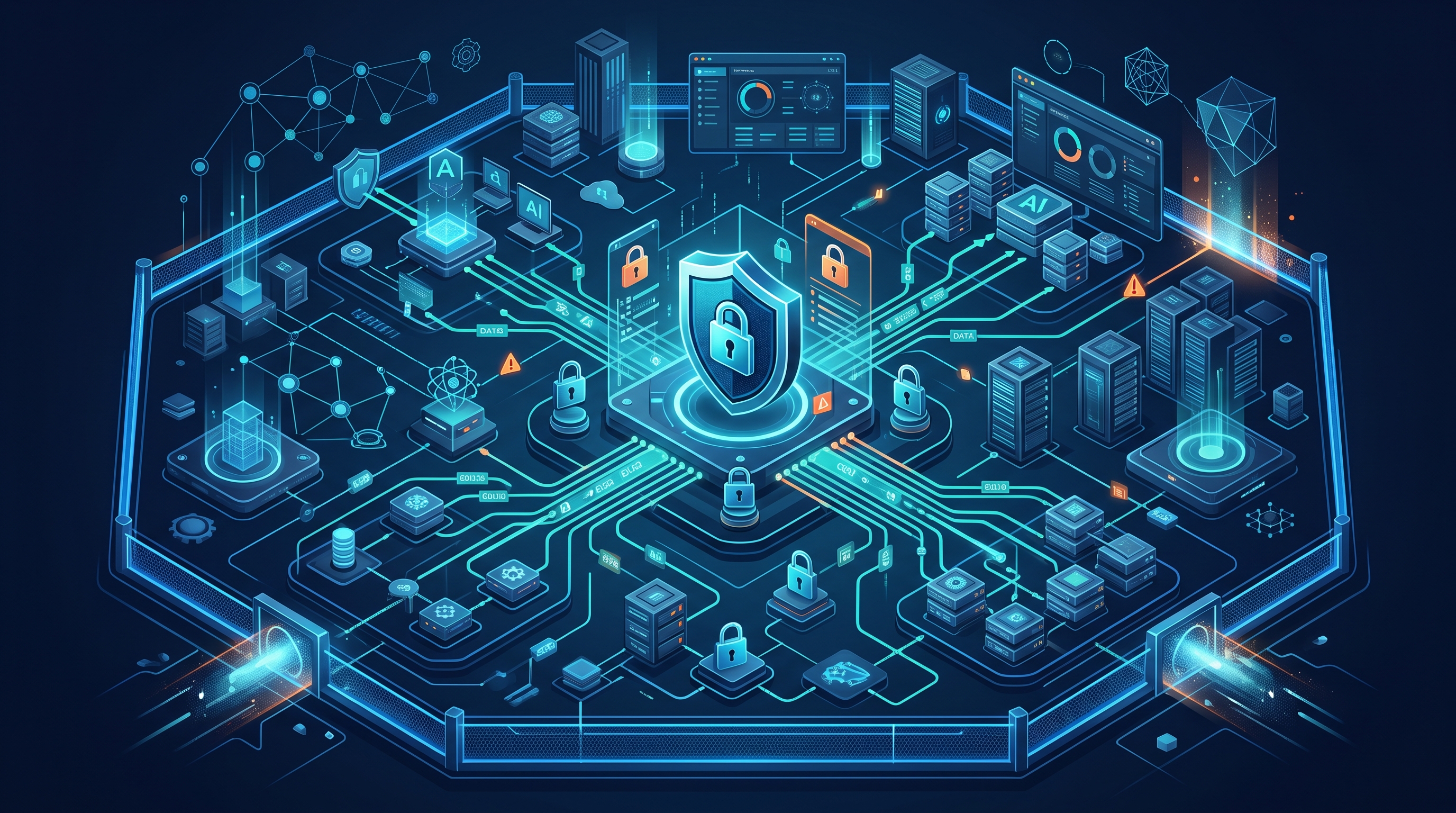
In 2026, the Model Context Protocol (MCP) has become the backbone of enterprise agentic workflows, but it has also introduced a critical attack surface that legacy security teams are ill-equipped to handle. I’ve spent the last 25 years securing financial infrastructure at JPMorgan Chase and Deutsche Bank, and I can tell you that the complexity of securing MCP servers is not just about API keys anymore. It’s about controlling the "blast radius" when an AI agent goes rogue or is compromised.
The core issue isn’t the LLM itself; it’s the tool execution layer. When an agent calls an MCP server, it’s invoking code that has access to production databases, cloud infrastructure, and sensitive PII. If your authorization model is coarse-grained, you’re giving every agent the keys to the kingdom. We need to shift from "trust the agent" to "verify the scope."
The Anatomy of MCP Server Authorization
Most organizations are still treating MCP servers like simple REST endpoints. This is a fatal error. An MCP server is a stateful execution environment that can read, write, and delete. To secure it, you must implement authorization at three distinct layers: transport, semantic, and resource.
At the transport layer, you should be using mutual TLS (mTLS) for all server-to-server communication. This ensures that only authorized agents can even establish a connection. However, mTLS is insufficient for fine-grained control. You need semantic authorization, which validates the intent of the request against policy.
For example, a "read-only" agent should never be able to invoke a create_user tool, even if the transport is secure. This is where mcp server authorization blast radius 2026 strategies come into play. You must define scopes that map directly to business functions, not just technical capabilities.
Defining and Enforcing Scopes
The most effective way to control blast radius is through strict scope definitions. In my recent work with enterprise MCP vs CLI DevOps patterns, I’ve seen teams struggle with over-permissioned agents. The solution is to treat scopes as immutable, auditable resources.
Consider the following scope structure for a financial operations agent:
finance:read:accounts: Allows reading account balances and transaction history.finance:write:transfers: Allows initiating ACH transfers, but only up to $10,000 per transaction.infra:read:k8s: Allows reading pod status and logs, but not modifying deployments.infra:write:k8s: Requires multi-person approval and is restricted to staging environments only.
By enforcing these scopes, you ensure that even if an attacker compromises an agent, they cannot escalate privileges. The agent is bound to its specific scope, creating a natural containment boundary.
The Blast Radius Problem in Agentic Workflows
The concept of "blast radius" is borrowed from distributed systems, but it applies differently to AI agents. In traditional systems, a compromised service might leak data. In agentic systems, a compromised agent can actively modify the environment, exfiltrate data, or trigger cascading failures across connected tools.
The blast radius is determined by the intersection of:
- Agent Identity: Who or what is making the request?
- Tool Permissions: What actions can this identity perform?
- Data Sensitivity: What level of data is being accessed?
If you allow an agent to have broad write access to a Kubernetes cluster, the blast radius includes all namespaces, secrets, and configurations. This is unacceptable. Instead, you should use namespace-scoped roles and service accounts. This limits the agent to specific workloads, reducing the potential damage by orders of magnitude.
For more context on how MCP integrates with existing AI infrastructure, see my post on MCP Servers: Model Context Protocol for Enterprise.
Implementing Zero-Trust for MCP Clients
Zero-trust is a buzzword, but in the context of MCP, it means explicitly verifying every request. You cannot rely on the network perimeter. Every tool invocation must be authenticated and authorized in real-time.
I recommend implementing a sidecar proxy or an API gateway that intercepts MCP calls. This proxy should:
- Validate the JWT or OIDC token of the calling agent.
- Check the requested scope against the agent’s allowed permissions.
- Log the request for audit purposes, including the full context of the prompt that triggered the tool call.
This approach adds negligible latency (typically less than 5ms) but provides critical visibility and control. Without this, you are flying blind.
Auditing and Observability
You cannot secure what you cannot see. MCP servers must generate detailed audit logs that capture not just the outcome of a tool call, but the context. This includes:
- The agent ID and version.
- The tool name and parameters.
- The scope used for authorization.
- The result (success, failure, or error).
These logs should be streamed to a centralized SIEM for real-time monitoring. Alerts should be triggered for unusual patterns, such as an agent making 100 read requests in a second or attempting to access a resource it has never accessed before.
For a deeper dive into how context windows impact these security decisions, check out my analysis on MCP Context Window for Enterprise AI Agents.
Frequently Asked Questions
Q: How do I handle legacy tools that don’t support MCP? A: Wrap legacy tools in a lightweight MCP adapter that enforces the same authorization policies. The adapter acts as a proxy, validating scopes before forwarding the request to the legacy system. This ensures that even old infrastructure is protected by modern zero-trust principles.
Q: Is mTLS enough for MCP security? A: No. mTLS only secures the transport layer. It does not validate the intent of the request or the permissions of the caller. You must combine mTLS with semantic authorization and scope-based access control to effectively mitigate blast radius.
Q: How do I test MCP authorization policies? A: Use automated testing frameworks that simulate agent behavior. Inject malicious or unexpected requests to verify that the authorization layer correctly denies access. These tests should be part of your CI/CD pipeline, ensuring that policy changes are validated before deployment.
Q: What is the recommended latency overhead for MCP authorization? A: With proper caching and efficient policy engines, the overhead should be less than 10ms. This is negligible compared to the latency of LLM inference, which typically ranges from 500ms to 2000ms. The security gain far outweighs the minor performance cost.
Conclusion
Securing MCP servers in 2026 is not optional; it is a prerequisite for deploying agentic AI in any serious enterprise environment. The key is to minimize the blast radius through strict authorization scopes, zero-trust verification, and comprehensive auditing. By treating MCP servers as critical infrastructure rather than simple APIs, you can unlock the power of agentic AI while maintaining the security and compliance standards that your organization demands.
If you want to understand how MCP compares to traditional CLI-based DevOps workflows, read my comparison on Enterprise MCP vs CLI DevOps.