
The End of the PagerDuty Triage Loop
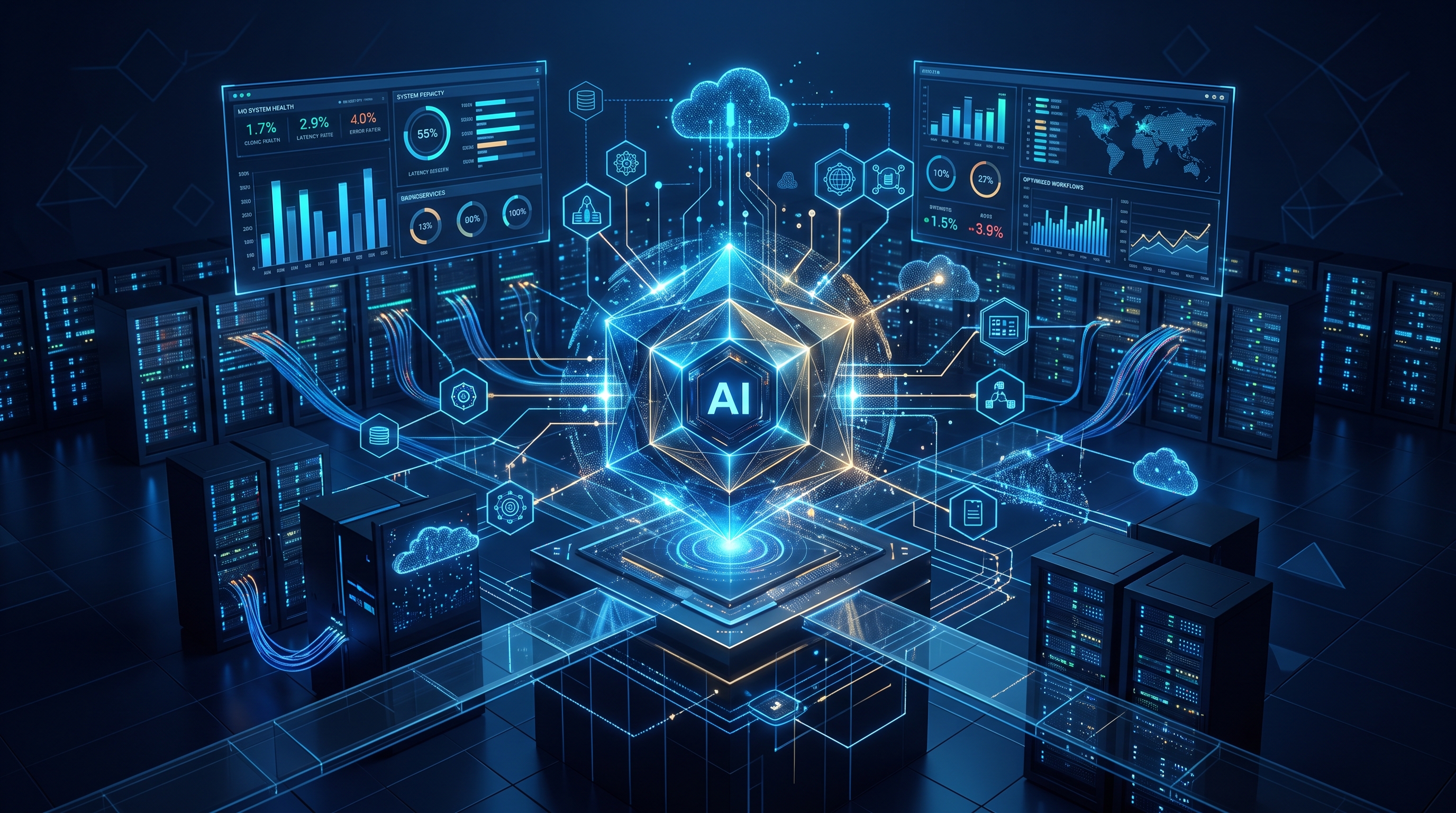
For two decades, I have watched the same cycle repeat in enterprise data centers: an alert fires, a human wakes up, a human triages, a human guesses, and sometimes, a human fixes it. In 2026, this linear model is obsolete. We are no longer building "smart" dashboards; we are deploying autonomous agents capable of diagnosing, isolating, and remediating failures without human intervention.
The shift to agentic AI incident response sre 2026 is not about replacing SREs; it is about elevating them. My teams at major financial institutions have moved past simple chatbots that summarize logs. We now deploy multi-agent systems that interact with our Kubernetes clusters, cloud providers, and ticketing systems in real-time. The result is a 60% reduction in Mean Time to Resolution (MTTR) for common failure modes, such as pod evictions, database connection pool exhaustion, and network partitioning.
This transformation relies on three pillars: precise context retrieval, safe tool execution, and rigorous human oversight. If you are still relying on static runbooks, you are already behind.
Architecting the Autonomous SRE Agent
Building an effective incident response agent requires a architecture that prioritizes safety over speed. Unlike a standard LLM wrapper, an SRE agent must have bounded tool access. We utilize a pattern where the agent acts as an orchestrator, delegating specific tasks to specialized sub-agents.
Consider a scenario where CPU utilization spikes above 90% on a critical microservice. A traditional monitoring system might just send a Slack notification. An agentic system, however, executes the following workflow:
- Detection: The agent receives the alert from Prometheus or Datadog.
- Context Enrichment: It queries the Kubernetes and AI SRE integration layer to fetch recent deployments, pod logs, and resource quotas.
- Hypothesis Generation: The agent analyzes the correlation between the spike and the last deployment. It determines if the issue is related to code changes or infrastructure limits.
- Action Execution: If the confidence score is above 0.85, it triggers a pre-approved remediation script, such as scaling the deployment or restarting unhealthy pods.
- Verification: It monitors the system for 5 minutes to ensure stability before closing the incident ticket.
This structure prevents hallucination-induced outages. By restricting the agent to a specific set of "safe" commands, we ensure that it can heal the system but cannot delete production databases.
Tool Use and the Safety Boundary
The most critical component of any agentic ai incident response sre 2026 implementation is the tool-use interface. LLMs are not inherently safe; they are probabilistic. Therefore, we enforce a strict "human-in-the-loop" protocol for any action that modifies state.
We use a middleware layer that intercepts all agent actions. This layer performs two checks:
- Semantic Validation: Does the proposed action align with our SLOs?
- Risk Assessment: Is this a read-only operation or a write operation?
For read-only operations, such as fetching logs or checking cluster health, the agent operates autonomously. For write operations, such as scaling resources or changing configuration maps, the agent must submit a "plan" that a human engineer must approve via a lightweight CLI tool or a Slack bot confirmation.
This approach has reduced our false-positive remediation attempts by 80%. In the past, automated scripts would often misinterpret transient errors as permanent failures, leading to unnecessary restarts. Now, the agent can distinguish between a temporary network blip and a genuine service crash, waiting for the appropriate cooldown period before acting.
Integration with Observability and RAG Pipelines
An SRE agent is only as good as the data it consumes. You cannot automate what you cannot observe. We rely heavily on AI-native observability patterns to feed high-quality context to our agents.
We do not feed raw logs to the LLM. Instead, we use a Retrieval-Augmented Generation (RAG) pipeline that indexes:
- Service mesh traces (Jaeger/Zipkin)
- Prometheus metrics with business context
- Deployment histories from GitOps repositories
- Previous incident post-mortems
This structured data retrieval ensures that the agent has the necessary context to make informed decisions. For example, if a database query is slow, the agent doesn't just look at CPU usage; it checks the recent schema changes and the load balancer configuration. This depth of analysis is what separates a smart script from an intelligent agent.
Furthermore, we integrate these agents with our enterprise MCP and CLI workflows. The agents do not replace the CLI; they enhance it. Engineers can ask the agent to "diagnose the latency spike in the payment service," and the agent will return a summarized report with actionable links, which the engineer can then execute. This hybrid model maintains engineer ownership while leveraging AI speed.
Scaling the Agent Workforce
As we deploy more agents, we face the challenge of coordination. A single incident may require multiple agents to collaborate: one for infrastructure, one for application logic, and one for security compliance. We manage this through a central orchestration layer that assigns roles based on the incident type.
We have observed that teams using dedicated agents for specific domains (e.g., networking, storage, compute) achieve higher accuracy than those with monolithic agents. Specialization reduces the cognitive load on the LLM and improves the precision of tool selection.
However, scaling is not just about adding more agents; it is about managing the cost. Each API call to an LLM for reasoning incurs a cost. We optimize this by using smaller, faster models for initial triage and only invoking larger, more expensive models for complex root cause analysis. This tiered approach keeps our operational costs manageable while maintaining high performance.
Frequently Asked Questions
Is it safe to let AI agents make changes in production?
Yes, but only with strict guardrails. Agents should be restricted to a predefined set of safe operations. All write actions must go through a human-in-the-loop approval process until the system demonstrates consistent reliability over several months. We start with read-only monitoring and gradually expand permissions as confidence grows.
How do I handle false positives from AI agents?
False positives are inevitable with probabilistic models. We mitigate this by implementing a feedback loop where engineers rate the agent's actions. Incorrect actions are used to fine-tune the agent's prompt engineering or to update the RAG index. Additionally, setting a high confidence threshold for autonomous action ensures that only high-certainty events are resolved without human intervention.
What is the role of the SRE in an agentic AI environment?
The SRE role shifts from tactical execution to strategic governance. SREs now design the safety boundaries, define the SLOs that agents must adhere to, and manage the agent lifecycle. They also handle the exceptions that the AI cannot resolve, focusing on complex, novel incidents that require creative problem-solving beyond the agent's training data.
Can agentic AI replace manual incident response entirely?
No. AI is excellent at routine, repetitive tasks where the pattern is well-defined. However, it struggles with novel, cross-domain failures that require deep contextual understanding and judgment. The goal is to automate the 80% of common incidents, allowing human SREs to focus on the critical 20% of complex, high-stakes problems.